Expedition
Birding & Wildlife in Eastern Mongolia – Khentii
Khentii province, eastern Mongolia
- Length
- 10 days
- Months
- Mid-May to late June
- Group
- 2 to 6 travellers
Overview
This ten-day birding and wildlife tour follows the road east from Ulaanbaatar into Khentii, the province of forests, rivers and wide valleys where Chinggis Khan was born. It is timed for mid-May to late June, when the cranes are nesting and, early in the season, the migrants are still passing through.
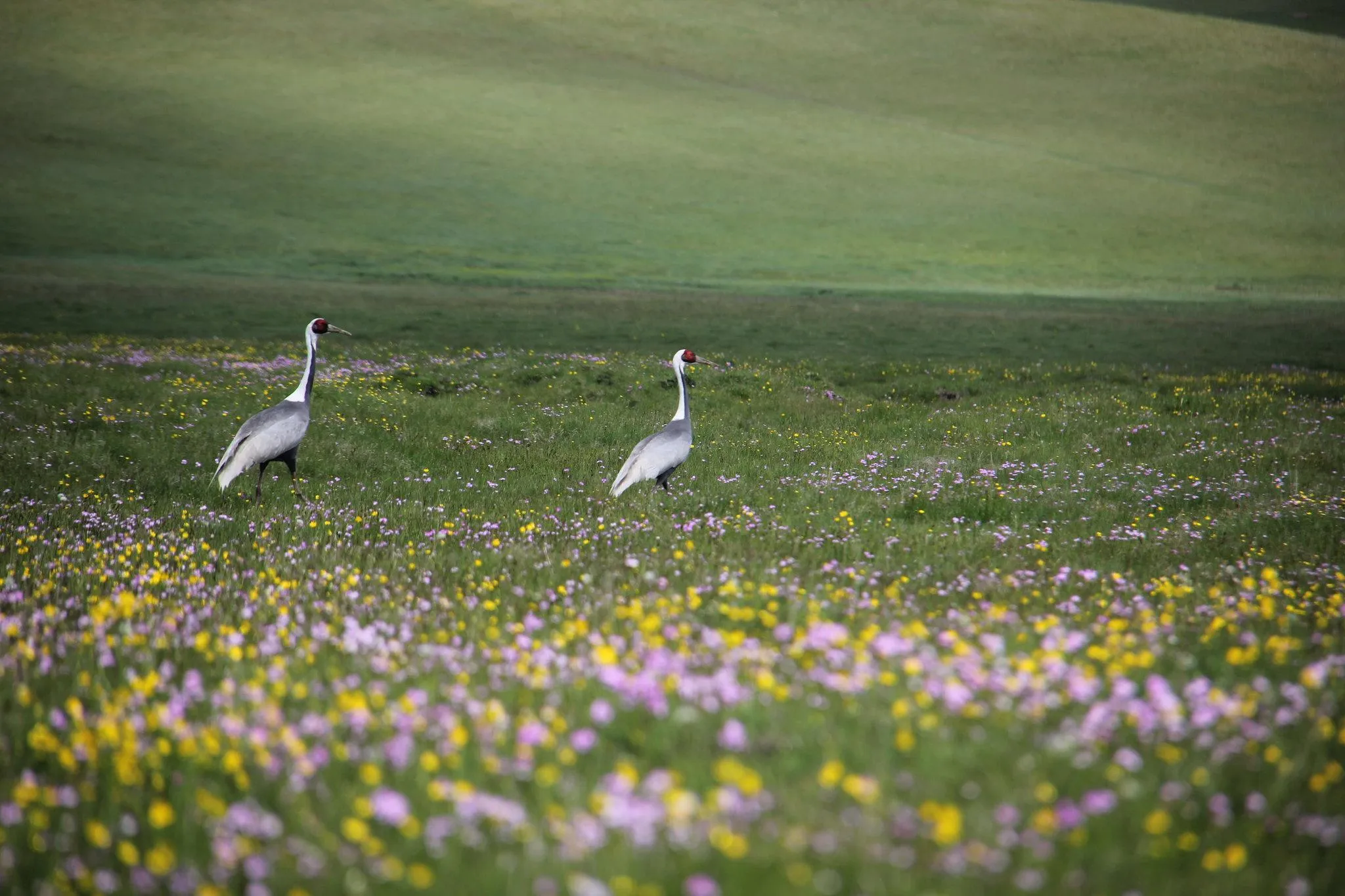
The journey begins near Terelj National Park, at the edge of the Khan Khentii mountains, and on the lakes of Gun-Galuut. It then crosses the Kherlen valley to the heart of the trip: the Khurkh valley, which holds the largest breeding concentration of White-naped Cranes in the world. We spend two full days there, among cranes, Great Bustards and waterbirds.
The last stage leads to the Onon river near the village of Binder, a short drive from Khurkh, where river, meadows and wooded hills bring together the birds of forest and steppe.
When to come for the birds
- Mid-May – late June – The cranes are nesting, the birds are in breeding plumage and singing, and until early June the last migrants are still passing through.
EquipmentWhat we provide, and what you need to bring
The Khentii expedition involves early starts, short walks and three nights in tents beside the wetlands of the Khurkh valley.
Provided by Artus Expeditions
- Shared spotting scopes and tripods
- Tents, sleeping mats and camping equipment in the Khurkh valley
- Drinking water
- A group first-aid kit
You will need to bring
- Layered clothing and a windproof, waterproof jacket
- A warm sleeping bag: nights can fall close to freezing in May
- Waterproof walking boots for the marshes
- Binoculars, sunglasses, sunscreen and insect repellent
- A headlamp, personal medication and toiletries
- Power banks and spare batteries
For photographers
- A camera with a long telephoto lens
- A tripod or monopod
- Spare batteries, memory cards and rain protection
Where it goes
For the best experience, we recommend viewing this map on a larger screen.
Natural Earth; Khövsgöl protected areas traced from the UTSPA map. Other areas shown at true area, not surveyed boundaries.
Protected since 2004 (Ramsar)
Khurkh-Khuiten Nature Reserve
429 km²— about a quarter of the area of Greater London
The valleys of the Khurkh and Khuiten rivers, a wetland of international importance and a national nature reserve since 2021. They hold the largest breeding concentration of White-naped Cranes in the world.
Day by day
The itinerary
Day 1
Arrival in Ulaanbaatar
Welcome to Mongolia. We meet you at the airport and drive you to your 4* hotel in the centre of Ulaanbaatar.
If you arrive in time, spend the afternoon discovering the city with a guide: Sükhbaatar Square, the heart of the capital, and Gandan Monastery, the largest active monastery in Mongolia. If your flight lands late, rest at the hotel after the journey.
In the evening, meet your guide for a welcome dinner and a briefing on the expedition. We go over the route east, the birds we hope to find along the way, and check your clothing and equipment together before the three nights of camping in the Khurkh valley.
Day 2
Ulaanbaatar to Terelj
Leave Ulaanbaatar early and drive north-east to Terelj National Park, at the south-western edge of the Khan Khentii mountains. Along the way, the steppe slowly turns to rocky hills and forest.
Spend the day exploring the forest edges, river banks and meadows near the camp. The taiga brings a very different set of birds from the steppe: Siberian Rubythroat, Red-flanked Bluetail and Pine Bunting are among the species we look for, along with woodpeckers, thrushes and raptors over the valleys.
In the evening, and again at first light the next morning, we look for Black-billed Capercaillie, the large forest grouse of the Khentii, which is most active at the start and end of the day.
Day 3
Terelj to Gun-Galuut
After an early walk in the forest, leave Terelj and drive south-east to Gun-Galuut, a landscape of lakes, marshes and grassy hills along the Kherlen river.
We spend the afternoon and evening around the water, where the steppe and the wetlands meet. Depending on the season, we may see White-naped and Demoiselle Cranes, Swan Geese, Bar-headed Geese, ducks, waders and terns, with raptors hunting over the surrounding hills.
Overnight in a ger camp close to the lakes, with time for a last observation session as the light fades.
Day 4
Across the Kherlen Valley to Khurkh
Head out early for a last look at the lakes of Gun-Galuut, then set off on the longest day of the journey east.
The road follows the wide valley of the Kherlen river to Chinggis (Öndörkhaan), the capital of Khentii province, before turning north towards the Khurkh valley. The landscape opens onto vast grasslands, with herders’ camps and their livestock scattered along the river. Stops are made along the way for raptors, larks and other steppe birds, and for lunch.
We arrive in the Khurkh valley in the evening and set up camp near the river.
Days 5–6
Two Full Days in the Khurkh Valley
The valleys of the Khurkh and Khuiten rivers are a Ramsar wetland and a national nature reserve, managed together with the herding families who live there. They hold the largest breeding concentration of White-naped Cranes in the world.
Each day begins early, when the cranes are calling and bird activity is at its best. We explore the river, the marshes, the meadows and the surrounding steppe, moving between different parts of the valley as conditions change. White-naped and Demoiselle Cranes nest here, and Hooded and Siberian Cranes may be seen on passage, along with Great Bustards, geese, ducks and many waders.
When the station is open and time allows, we visit the Khurkh bird-ringing station, run by a Mongolian conservation organisation, to learn about their work with the migratory birds that pass through the valley.
The programme remains flexible, allowing more time wherever recent bird movements are most promising.
Day 7
Khurkh to the Onon River at Binder
After a final early morning in the Khurkh valley, we break camp and drive north to the village of Binder, on the banks of the Onon river.
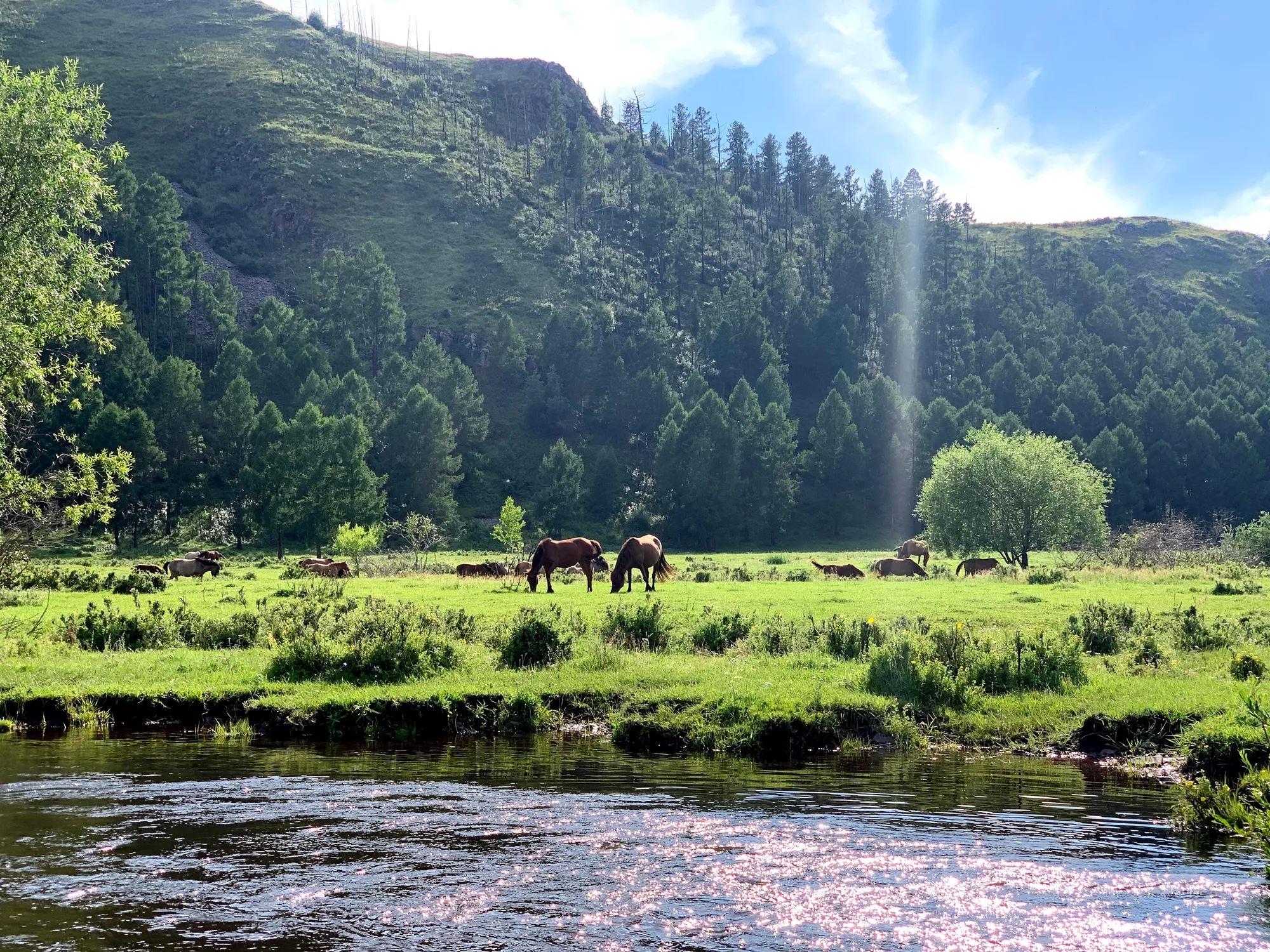
The Onon rises in the Khentii mountains and flows on into Russia, where it joins the Amur. Around Binder, its valley mixes river channels, willow thickets, meadows and wooded hillsides.
In the afternoon and evening, we explore the river banks and the meadows near the camp.
Day 8
The Onon River Valley
Spend a full day exploring the river banks, meadows and wooded side valleys of the Onon, with most of the field time in the cooler morning and late afternoon.
Swan Geese and White-naped Cranes breed along the Onon. The mix of forest and steppe brings together birds of both habitats, from woodpeckers and forest songbirds to raptors over the open valleys.
We also look for the mammals of the forest edge, which are best seen at the start and end of the day.
Day 9
Binder to Ulaanbaatar
Leave Binder early for the long drive back to Ulaanbaatar. Further stops can be made along the way whenever wildlife is seen.
We arrive in the capital in the evening, in time for a farewell dinner together before a last night at the hotel.
Day 10
Departure
Transfer to the airport for your flight home.
The whole journey is by road, around 1,200 km in total. The order of activities may change with the weather, water levels and recent bird movements.
Your expedition
What is included :
Included
- All ground transport in Mongolia, using our own vehicles and drivers, with fuel included
- All accommodation listed in the itinerary
- All meals and drinking water throughout the expedition
- Your expedition guide, together with the local rangers, trackers and spotters who work with us
- All park and reserve entry fees and permits
- Airport transfers in Ulaanbaatar on the scheduled arrival and departure days
- All camping and cooking equipment required by the itinerary
Not included
- International flights to and from Ulaanbaatar
- Travel insurance, which is required and must cover medical evacuation
- Visa fees, where applicable
- Alcoholic drinks and personal expenses
- Optional activities or services not listed in the itinerary
Key species
Wildlife to look for on this expedition
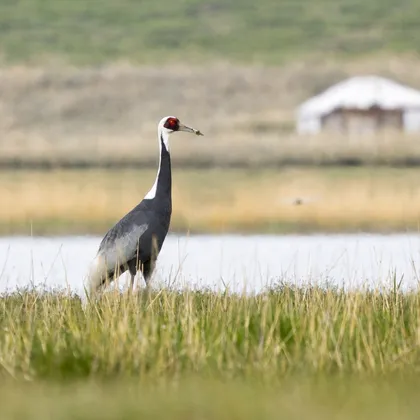
White-naped craneAntigone vipio 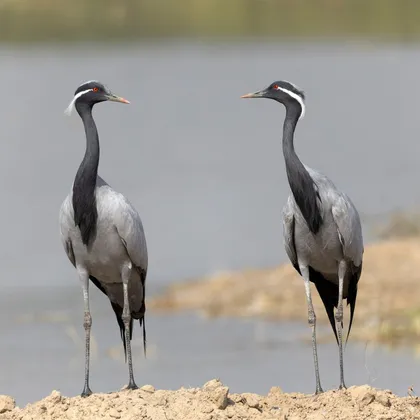
Demoiselle craneGrus virgo 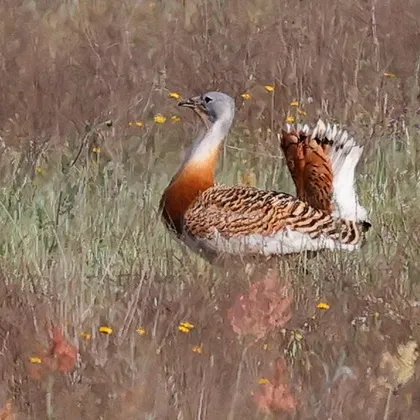
Great bustardOtis tarda 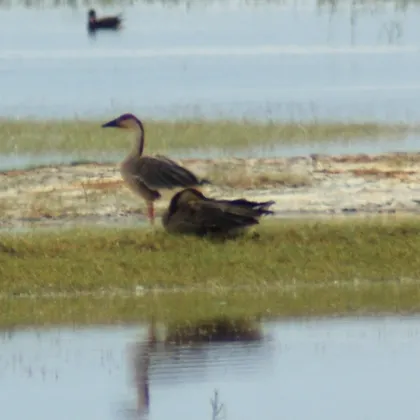
Swan gooseAnser cygnoides 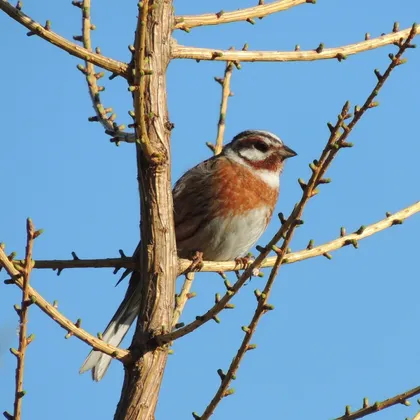
Pine buntingEmberiza leucocephalos 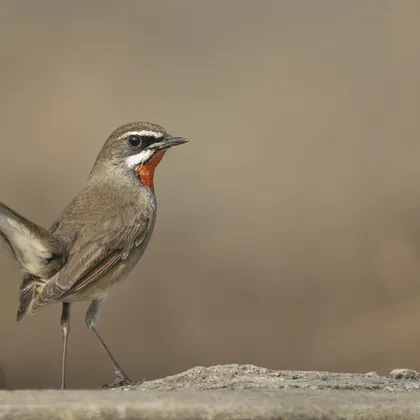
Siberian rubythroatCalliope calliope 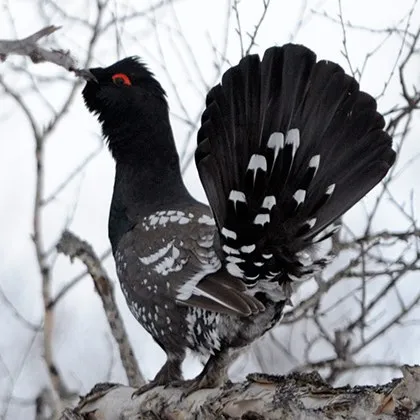
Black-billed capercaillieTetrao urogalloides
Other species you may see
- Hooded Crane
- Siberian Crane
- Red-flanked Bluetail
- Red Deer
Before you book
The realities of this expedition
This is a remote expedition with basic facilities and long days in the field. It will not suit everyone, and we want you to know what to expect before you decide.
- Two long days on the road: about 450 km on day 4 and 400 km on day 9.
- Three nights in tents in the Khurkh valley, with no washing facilities.
- The best hours are early: most field sessions start at first light.
- Mosquitoes can be numerous around the wetlands and rivers in June.
How we watch
Watching without disturbing
We keep our distance, never bait or call animals, and do not use drones. In the field, we follow the guidance of the local rangers and researchers working with us. Every traveller is briefed before the expedition.
Sightings are never guaranteed. The welfare of the animal always comes before the photograph.
Ask us anything about this trip
Dates, fitness, cold, cameras, or what happens if the weather closes in. We answer these ourselves.